LAWCO.NEWS
Mr.Newz Indiana
Disgusting Haircuts For The Win
Disgusting Haircuts For The Win
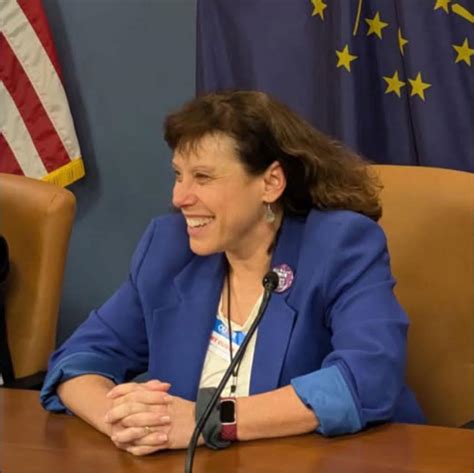
NASHVILLE — House District 62 covers all of Brown County and portions of Monroe and Jackson counties. Democrat Amy Huffman Oliver defeated Republican incumbent Dave Hall on Tuesday. Oliver received about 59 percent of the vote to Hall’s 41 percent. The seat had been held by Republicans in recent cycles. Oliver becomes the first Democrat to represent the district since 2010.
Hall had held the seat by thin margins. He won in 2022 by 74 votes after a recount, with 50.1 percent, and again in 2024 with 51.1 percent. The district includes Nashville, Bean Blossom, Helmsburg, and the Cordry-Sweetwater area in Brown County; parts of Monroe County outside Bloomington city limits; and Owen, Pershing, and Salt Creek townships in Jackson County.
Oliver is a family law attorney and mediator who lives in a log cabin in Brown County. She previously worked as a deputy prosecutor in Monroe and Marion counties, as legal director for Turning Point Domestic Violence Services in Columbus, and as a deputy attorney general. She taught history at Brown County Junior High and at a high school in Columbus. Voters elected her to the Brown County Schools board in 2020; she is in her second term, which runs through 2028. She is a fourth-generation Hoosier who returned to Brown County with her husband after starting their law careers in Indianapolis. They raised two sons here.
What she ran on
Her first stated priority is public school funding. She has said the current system is flawed because state money is divided among traditional public schools, charter schools, and private-school vouchers. Lawmakers removed the income limit on the voucher program in 2025, with the change taking effect for the 2026-27 school year. Oliver has said she would work to reverse that expansion and increase funding for public schools, especially small rural ones. She also supports leaving more decisions with local school boards rather than the legislature.
On household costs, she has called for ending the state sales tax on home utility bills, which her campaign says would save the average family about $350 a year. She wants utilities held to tighter limits on rates and wants companies, not ratepayers, to cover the cost of new technology until it produces power. She has opposed long-term sales-tax breaks and large property-tax breaks for data centers, arguing that those facilities should cover their own water and electricity costs so the burden does not fall on local ratepayers.
On taxes more broadly, she has said she does not support eliminating property taxes. In a survey response she noted that property taxes fund public schools, local police, fire and EMS, and libraries, and that sales-tax alternatives are less stable. She has also listed support for union workers, expanded preventive and home-based health care, and more attention to rural childcare, hospitals, roads, and emergency services.
What supporters and critics expect
Supporters describe a representative who already knows the district from the school board and from years of local work. They expect her to press for more state money directed to public schools in Brown, Monroe, and Jackson counties, and to argue against further expansion of the voucher program. They also expect her to raise utility-cost and data-center questions when those bills come up, and to use her legal background on domestic-violence and consumer issues when related legislation appears. In a House where Republicans still hold a large majority, supporters say her main effect will be to put a different set of votes and questions on the record rather than to pass major new programs on her own.
Critics note that she will be one of roughly 30 Democrats in a 100-member House that has had a Republican supermajority since 2012. They predict she will vote against further tax reductions that rely on cutting property-tax or other local revenue, and against measures that continue or expand private-school choice. They also expect her to support higher state spending on public education and health programs even if those proposals require additional revenue or slower growth in other areas. Some local Republicans have said the margin shows the district’s Monroe County precincts carried the result, and that Brown County voters who preferred Hall will now be represented by someone whose school-funding and tax positions differ from the recent Republican majority.
Oliver takes office in January. The House remains under Republican control. What changes in District 62 will show up first in the votes she casts on school funding, utility bills, and local tax authority, and in whether she can move any of those items out of committee.